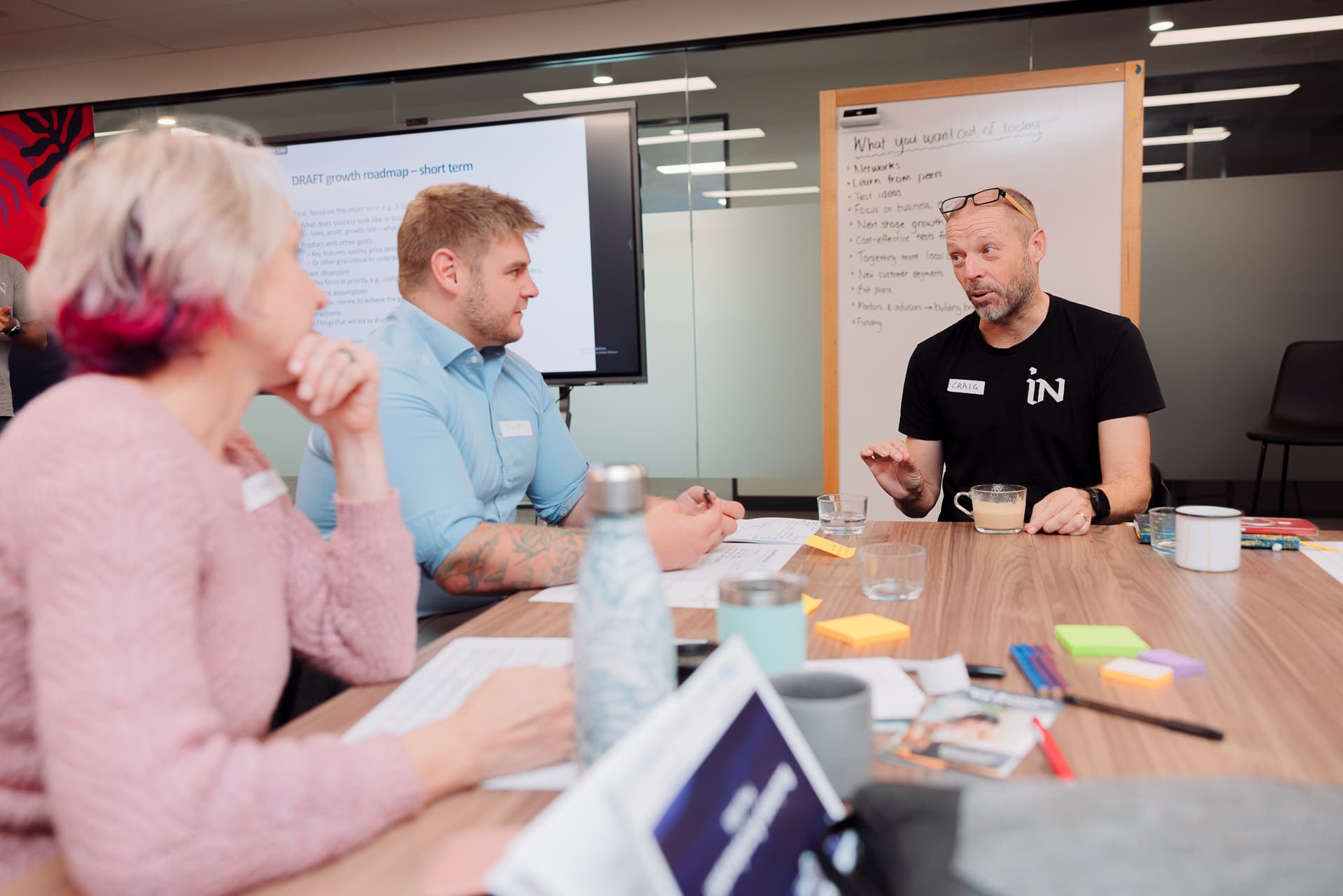
Writing the end of year CEO message is getting harder each year and in more than one way. Firstly, we live in times where most of the innovation scene’s attention is captured by the rapid advances in generative ai, robotics and automation. But beyond that, our own innovation ecosystem is dynamic and undergoing constant reconfiguration and growth.
2025 will be remembered as the year when the Times Magazine selected the architects of AI as the Person of the Year. Machines process (and generate) most of the data we get in touch with these days. In the innovation and entrepreneurship space, AI is causing a massive disruption. Creative destruction as coined by Joseph Schumpeter, the father of the theory of entrepreneurship and innovation, is the byproduct or externality of successful innovation.
The capability that was not so long ago a privilege of a relatively small class (approximately 47M software developers around the word according to some sources) has been democratised and made available to you and me. Lovable is one year old. But there is an explosion of prompt to app tools, including our (Canberra) own. Have you heard of JDoodle? Beyond app development tools, there are systems that augment how we live, take notes, how we operate our life with omnipresent AI. Have you heard of meos? For the entrepreneurs this means that their customers now have access to AI coding capability, AI based memory and augmented super skills. Anyone can now prototype and often meet their needs by development of their own products independently. OpenAI claims that the next unicorn will be built by a company with just one founder using tools and agents to orchestrate the entre business and its growth to the valuation of over $1B.
Maybe. In my opinion, it will be a sad day when we lose the magic of high performing, well aligned teams, connected through a purpose to contribute to a better world via a thriving business. We certainly see a shift towards smaller teams being more productive, moving faster and not needing to scale headcount as aggressively as before. In these turbulent times, entrepreneurship and especially innovative entrepreneurship is more important than ever. One way how we, as a society, can make up for the potential job losses is to engage more in creation of new companies. The goal may not be for these to become super large but we will need to have many more of them to support the same or growing levels of employment. These companies will also need to be more adaptive and develop dynamic capabilities because the landscape is changing faster and all the time. We often refer to these types of entities as learning organisations. Learning, ongoing technology adoption and resilience / flexibility building to respond quickly to structural shifts in demand will become more important. To achieve this, we believe, companies will need to be even more connected to their environments. Local innovation ecosystems will become critical to amplify companies’ ability to adapt, feed their ambition, help them find partners, specialised service providers and collaborators, and broker access to knowledge as well as specialised infrastructure and skills.
And that’s where functional innovation networks come in.
With over 250 events, across all sectors and stages of maturity of firms, close to 10,000 participants in those events, over 20 programs targeting different needs across the ecosystem, CBRIN brings together people to create an environment in which you can access mentors, customers, partners, investors, collaborators, makers, creatives, researchers, students and other talent and connections. We believe it will be the people networks that will matter for success, survival and adaptation in this ai enabled world. Human connection still provides an essential input into our existence. Local relationships that are not only online but with people you can see and have face to face conversations with will matter. It is because trust is the key ingredient enabling progress of smart communities, partly because all their members are social creatures who long for real and trusted connections.
So, what does it mean for us?
As 2025 comes to a close, at CBRIN we truly appreciate and are grateful to everyone who contributes to building our shared innovation ecosystem in the ACT. This collective progress depends entirely on people – entrepreneurs testing new ideas, leaders and coordinators in other intermediary organisations connecting or providing support to various ecosystem actors, researchers deploying their expertise in ways that can benefit people, public and private sector partners trying new approaches, educators supporting student entrepreneurship, investors backing local capability, and a broader community committed to making Canberra a clever, connected and creative city where innovation drives impact.
Strengthening the foundations of a growing ecosystem
One of the more important developments for CBRIN in 2025 was the growing utilisation of Level 4 as the new SME and Scaleup Hub. Supported by a $3.1 million ACT Government investment in 2024, this 1,600 m² space has already become a base for companies moving from early stage to sustained growth and scaling. The space currently hosts companies and initiatives that contribute to a better planet, better public health, better communication and collaboration, stronger cybersecurity and more responsible artificial intelligence. The strong interest from scale up founders and SMEs confirm the ongoing demand for high-quality, purpose-built shared innovation space in our city.
Program delivery across the network also expanded. First Wednesday Connect continued to draw new and returning participants, closing (with 3,356 registrations) its strongest year in more than 10 years. Canberra has seen 116 interactions of this event with a total of over 24 thousand participants, held across 16 different venues, giving an opportunity to more than 1500 people to deliver their one-minute pitches. Approximately 38% of attendees, or 1466 people, have registered for this event for the first time in 2025. This is the second highest absolute growth number over the ten years. First Wednesdays continue to stimulate and reflect the vibrancy of our innovation ecosystem.
This year we tested or grew other programs, including the Young Entrepreneur Sprint in collaboration with ASE targeting young people who may be thinking about entrepreneurship as their career choice, InnovationACT that helps students conceptualise and pitch their first ventures and has achieved its highest number of registrations since CBRIN started to run the program. We deepened engagement with core Foundation Members, the ANU, UC, UNSW Canberra and CIT and strengthened collaboration with the AIE. We also welcomed our new education partner – the Australian Catholic University. These partnerships are all focused on creating a clearer pathway from education and research into entrepreneurial impact.
This year’s innovation showcase was our largest event ever held with over 800 registrations. The new format that we tested, with parallel stream of presentations and panels, seemed to hit the mark. The innovation community in the ACT seek authentic connections with real entrepreneurs, investors and community leaders. It inspires them and motivates them to build their own ventures, commercialise their research or contribute to existing companies in the ACT.
Practical support: from ideas to innovation companies
On the innovation funding front, the ecosystem has been very active this year.
In April CBRIN has held its largest Investor Showcase to date. With over 100 registered investors, including over 20 interstate venture funds, and over 30 companies raising capital, the event has become a proven way for founders and investors to connect, build relationship and open pathways to venture investment. In the last financial year (2024/25) the companies in the Canberra innovation ecosystem that we track raised over $200M, which is one of the stronger years in terms of capital that fuels our innovation economy.
The Prototyping Voucher Pilot, delivered with the ACT’s universities and higher education institutions, enables local innovators to access engineering, fabrication, design and testing capabilities that are normally out of reach for small companies. The process, applications, pitches, structured feedback and coordinated allocation of vouchers across the participating institutions helps those with physical prototypes access what they need to progress. The variety of innovations coming through this pathway is phenomenal, from novel ag-tech tools to meshed IoT sensor networks the applicants are keen to test what physical products can be made from Canberra.
Innovation Connect Grants funded by the ACT Government continue to provide essential pre-seed support to people who have bold ambitious ideas and need to get customer or investor ready. Supported by CBRIN’s Idea to Impact program and a variety of events for entrepreneurs, including the Female Founder series, ICON provides the lifeblood of the innovation pipeline in the ACT. Over the year CBRIN administered 2 rounds of funding and allocated approximately 500k in up to 30k matched grants to some 15 ventures. The shortlisted venture founders had to pitch to an independent panel and compete with more than 120 other applicants.
As part of the ACT funding landscape, the Mill House Ventures deliver ACT Government supported ACT Social Enterprise Grants. These are available to aspiring or existing social enterprise founders and teams through 25 matched grants of up to $30k being available over 2 years. It is an essential support in the shared innovation ecosystem and these grants plus the Mill House programs have been transformational in the for-purpose sector.
Energy Innovation Fund grants delivered by the ACT Government provide funding for solutions that contribute to Canberra’s leadership in energy innovation and energy transition. CBRIN in collaboration with higher education institutions has been successful this year in securing an innovation ecosystem grant that will see us deliver a series of events and activities next year to strengthen and connect the energy innovation community.
Griffin Accelerator brings together a group of 15-20 mentors / investors who select and support a number (eight this year) of ventures that have high growth potential. At the end of the 12-week program, hosted and supported by CBRIN, the founders pitch to raise bridging capital from a shared pool that the mentors put together. Their next step is to close their first rounds and set their companies on growth pathways. This program has been a constant in the innovation ecosystem for more than 11 years, with 77 companies participating, 56 invested in through 13 trusts, with 46% female founders, 79% net promoter score (2025 update responses), a total of $2.1M invested by the Griffin trusts and further $29M+ raised by the companies to reach an aggregate valuation of $92M + (based on last-transaction valuation).
And lastly, the ACT Government and partners have launched the much needed ACTivate Capital Fund this year. With $23M committed to support growth of ACT based ventures and another $27M targeted to be raised for the fund in the future, this (up to series A focused) fund will play a critical role in taking the ventures further, towards established innovation companies that form a solid, diversified and growth potential basis of the ACT economy. We are very much looking forward to collaborating with the ACTivate team to ensure that ACT based innovative ventures can openly compete for investment from this fund.
Building Canberra’s global position as a knowledge city
International recognition of Canberra’s innovation ecosystem strengthened this year. At the ACEEU Triple E Awards in Prague, the Canberra Innovation Network was named runner‑up for Innovation Ecosystem of the Year, a result earned through the collective work of founders, researchers, government partners and industry contributors across the ACT. This international acknowledgement reflected the growing maturity, visibility and collaborative capability of the ACT ecosystem. On the back of this success, we were also invited to share our recipe for building and nurturing a highly connected innovation ecosystem through an article in the global ACEEU Spotlight online magazine.
The Canberra Innovation ecosystem was featured as the first case study in the Handbook of Innovation Ecosystems by Dr John Howard. Other innovation ecosystems profiled in this section of the handbook include 22@Barcelona in Spain, Kendall Square in Boston, MA, MaRS in Toronto, Canada, London Knowledge Quarter in the UK and Dublin Docklands in Ireland.
The value of innovation beyond technology
A lot of times people may suspect that innovation is predominantly related to technology or deep research. This is far from the truth. The inaugural Not‑for‑Profit Innovation Summit, led by Hands Across Canberra, the University of Canberra and other partners, brought together close to 100 participants from community organisations, researchers, health and wellbeing specialists, social enterprises, and government. We focused on “ending loneliness” to test whether innovation approaches are as relevant to social challenges as they are to the technical ones. From the participation and feedback it seems that they really are.
This year we also delivered the Landscape Rehydration Collaboration Lab for ACT Natural Resource Management (ACTNRM), bringing together ACT land managers, researchers, and policy experts to discuss challenges and opportunities in landscape rehydration as part of the Australian Government’s National Soils Action Plan.
We supported the University of Canberra and a variety of stakeholders to deliver Industry Roundtable assessing and formulating responses to the tech skills gaps in higher education. The aim is to ensure that our university courses focus on what matters to industry and entrepreneurs.
We worked the Swiss Embassy in Australia to explore the role of trust in innovation through a hackathon for students from our foundation member institutions. Through this collaboration we also connected with InnoSuisse who orchestrate and support the innovation ecosystem in Switzerland.
Preparing for an accelerated future
The coming year will place increasing demands on coordination, collaboration, ambition and focus as AI continues to reshape everything we knew about innovation at the end of this year. We have endless optimism that Canberra will emerge from this reshaping successfully as it has all the key ingredients in place: talented population, research depth, civic cohesion and a practical mindset to adopt new ways of thinking, working and engaging with the world.
For CBRIN, we will continue to act as a neutral and shared backbone, working on reducing duplication, increasing visibility across initiatives, and helping organisations and people turn their ideas to impact.
Thank you
To the founders building companies in Canberra, the students beginning their entrepreneurial journeys, the researchers applying their expertise to practical problems, the corporate and public sector partners who back this work, and the many mentors and supporters who give their time—thank you. Special mentions and deep thanks go to our long term backers: ACT Government, the Australian National University, the University of Canberra, Canberra Institute of Technology, UNSW Canberra, our Education Partners, the Australian Catholic University and Academy of Interactive Entertainment, to our Gold Partners: King & Wood Mallesons, PwC Australia, Optus and Canberra Airport.
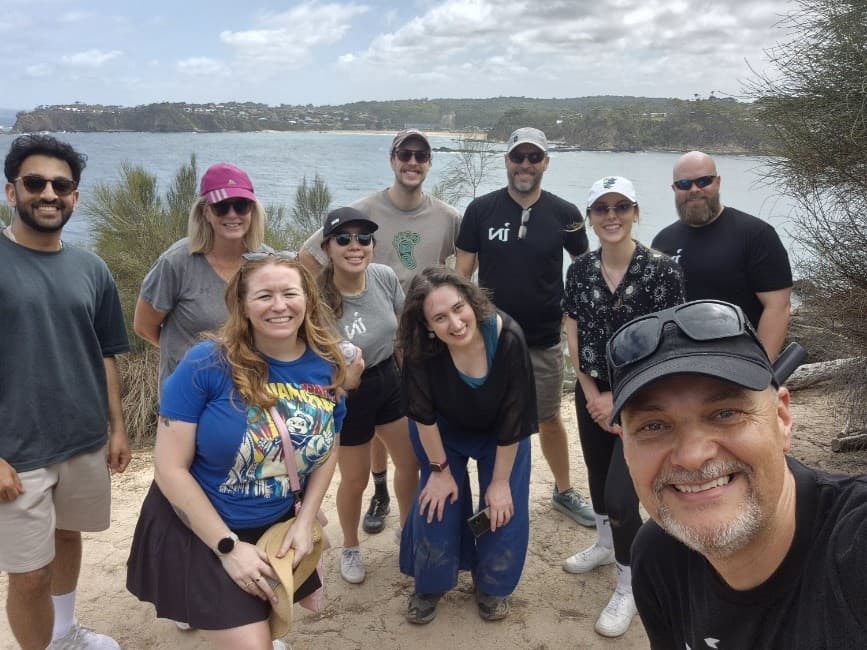
To our team at CBRIN, thank you for your discipline, honesty, commitment and hard work throughout the year. It takes a well-connected team to create magic and you certainly know how to supply this magic for our innovation ecosystem. I am eternally grateful to all of you!
Canberra’s innovation ecosystem is strengthening because its people choose to work together to create a better world. We look forward to another year of this highly inspiring work in this amazingly clever, connected and creative city.