Earlier this year, while promoting InnovationACT to students, I spoke with several who felt they didn't have a "real chance" in the competition because they lacked a technical background. Part of my motivation for running this series is to challenge that perception.
Through these stories, I'm highlighting projects that demonstrate innovation beyond the stereotypical software, app, or hardware solution. Innovation comes in many shapes and forms, and YEAF, one of our InnovationACT 2026 finalists, is a great example of that. Their journey shows that impactful ideas aren't limited to those with technical expertise, and that some of the most innovative solutions emerge from entirely different perspectives.
YEAF by Yuting Su and Xiaohan Xue, is a tea experience built around connection, bringing people together through tea cultures from around the world. Starting with a workshop to explore different teas and discover personal preferences, they offer rotating hands-on activities that change with each session. In a world that keeps getting faster, YEAF offers a simple, accessible way to pause, learn and share around a cup of tea.
YEAF's founders explain more about their tea experience.
Walk us through the YEAF experience.
YEAF started from a simple idea: tea can create a gentler and more inclusive way for people to spend time together.
We want a YEAF session to feel calm, welcoming and easy to join. There is no expectation that participants need to understand tea before they arrive. People can experience it at their own pace — by tasting, observing, asking questions, talking with others, or simply enjoying the moment.
Sharing is an important part of the experience. In many tea settings we have encountered in Australia, tea is often served as an individual pot for one person. At YEAF, we are more interested in brewing one tea and sharing it together. A fairness pitcher, or gong dao bei , allows the tea to be poured evenly and shared among everyone at the table. The tea becomes something held in common, rather than something separate for each person.
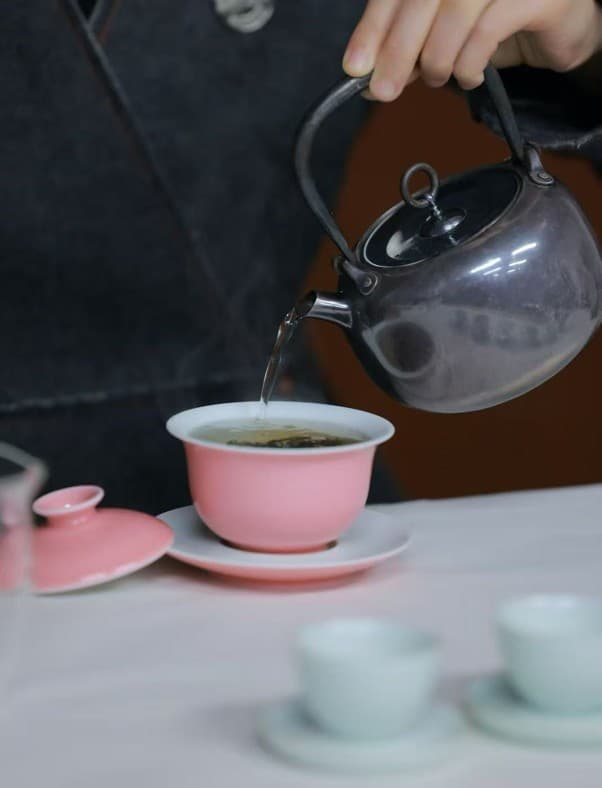 Hot water hitting loose leaves, unfurling them into an amber brew as fresh steam rises. Photo: Supplied by YEAF co-founders.
We also want to give people a more thoughtful choice of tea. Many everyday tea bags use smaller or broken leaves, which brew very quickly and can sometimes produce a stronger, more astringent cup. Whole-leaf tea can offer a very different experience, with more aroma, texture and change across multiple infusions. Even within one category, there can be enormous variety. Oolong is a good example. Feng Huang Dan Cong can be highly aromatic and floral, while Wuyi rock teas are often appreciated for a deeper, more mineral character and what tea drinkers describe as yan yun, or “rock rhyme”. We want people to experience those differences for themselves, rather than think of tea only through broad labels such as “smoky” or “strong”.
.png&w=1920&q=75) Different kinds of tea leaves. Photo: Supplied by YEAF co-founders.
Different kinds of tea leaves. Photo: Supplied by YEAF co-founders.A session may begin with the story of the tea — where it comes from, how it is made, and what makes it distinctive. Participants can smell the leaves, watch them open during brewing, taste how the flavour changes between infusions, and share what they notice. The physical setup is intentionally simple and flexible. We want YEAF to work in different spaces, rather than depend on a formal tearoom. What matters most is creating a setting where people feel comfortable sitting together, sharing tea and slowing down for a while.
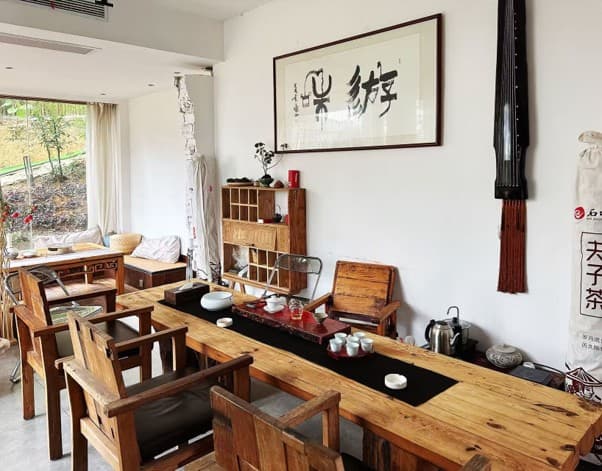 Tea room. Photo: Supplied by YEAF co-founders.
Tea ceremonies are about more than tea. How do they foster connection and cultural understanding?
For us, tea is the medium, but people are at the heart of YEAF.
One of the reasons we started YEAF was the feeling that modern life gives people many ways to stay busy, but not always many ways to slow down and connect comfortably with others. Social interaction can easily become rushed, task-focused, or centred around coffee, alcohol or formal networking. We wanted to create another option — something softer, more inclusive and easier to join. Tea works well for this because it naturally gives people both a shared rhythm and a shared topic. People do not need to search for something to say straight away. They might comment on the aroma, compare one infusion with the next, or simply say that they like a particular flavour. In that sense, tea is a little like sharing a meal. Sometimes conversation starts from something very simple — “this dish is really good” — and gradually opens into something more personal or meaningful. Tea can work in the same way. It also reduces some of the pressure that can come with socialising. Tea gives people something to share before they have to share something about themselves. That can make the experience feel more comfortable for people who are quieter, meeting others for the first time, or simply do not enjoy highly structured networking.
Brewing tea can also create a kind of quiet focus. Making tea well requires attention to the water temperature, timing, amount of tea, and how the leaves change from one infusion to the next. Small changes can affect aroma, texture, bitterness and sweetness. In that process, attention naturally returns to the present moment. Culture is another part of the connection. Tea carries different meanings across countries, families and generations. A conversation about one tea can easily lead to stories about home, food, travel, tradition or memory. We hope YEAF can make those exchanges feel natural, rather than formal or instructional. Ultimately, we want YEAF to create a space where people from different backgrounds can sit at the same table, share something together, and leave with a new taste, a new story, or a new connection.
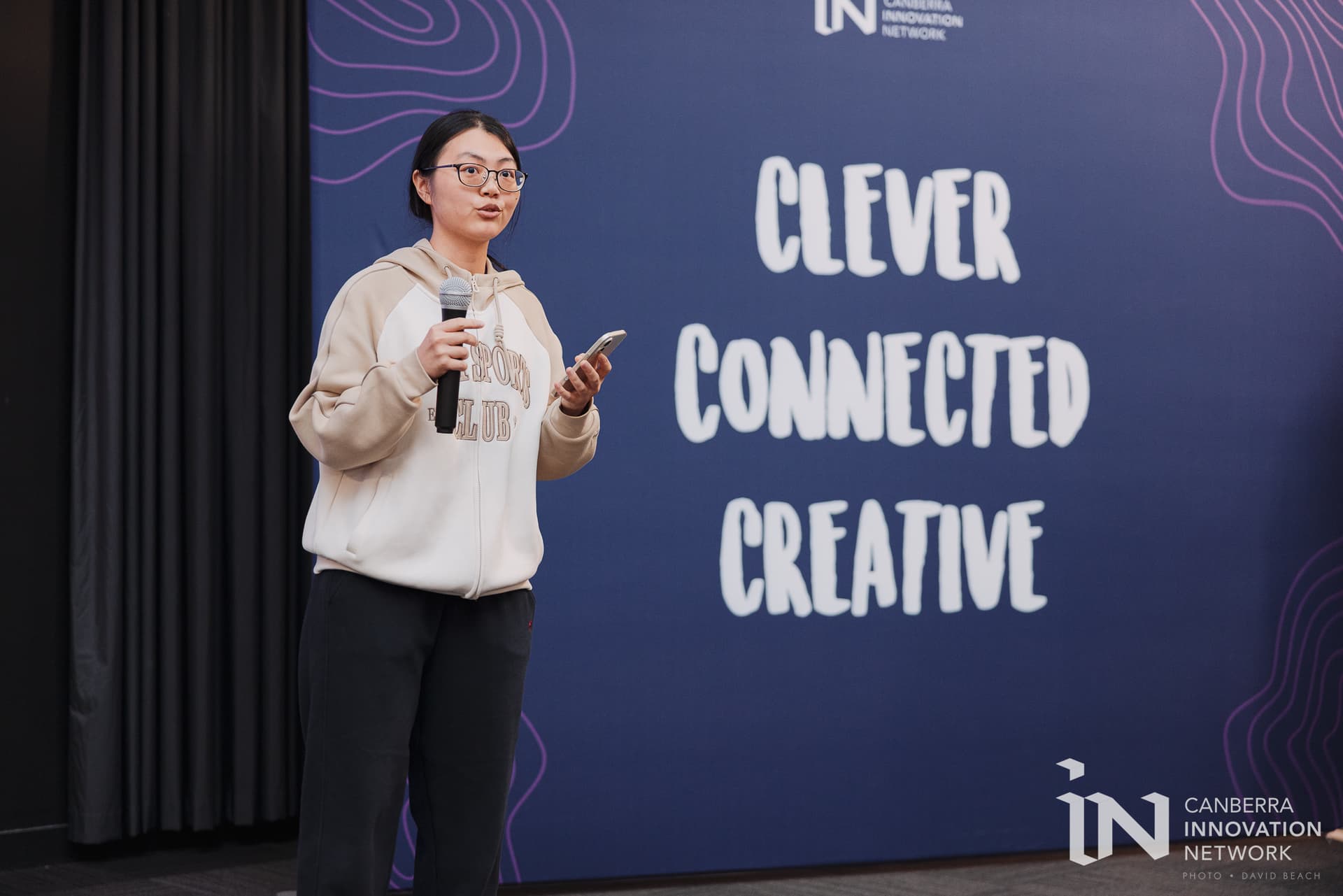 YEAF Co-founder, Xiaohan Xue pitching the tea experience at First Wednesday Connect (September 2026, Academy of Interactive Education Canberra). Photo: David Beach.
This is your opportunity to share your expertise and give readers a taste of what they might learn at a YEAF workshop.
Tea is much more than a drink, and that is something we would love more people to discover through YEAF. Many people know tea mainly through tea bags, but may not have had the opportunity to experience good whole-leaf tea. A well-made tea is not simply about being strong or bitter. Depending on the tea and how it is brewed, people may notice floral, fruity, roasted or mineral notes, as well as a gentle sweetness that appears after swallowing. In Chinese tea culture, this is often described as hui gan, or returning sweetness.
Tea can also teach us to pay attention. Brewing well requires focus on the water, timing, temperature, the leaves and how the tea changes from one infusion to the next. For a few minutes, the task becomes very simple: notice what is happening and take care of what is in front of you. We think that present-moment awareness is increasingly valuable. It is not about ignoring the past or refusing to think about the future, but about not letting either take over the moment you are actually living in. Tea gives people a small and practical way to practise that — one cup, one infusion, one moment at a time.
We are also interested in tea as part of a broader approach to wellbeing. Tea can engage the senses, encourage concentration, create social connection, and carry stories of culture and place. Its life does not necessarily end after drinking either. Used tea leaves can be explored through activities such as incense-making, while other parts of the tea plant, including its seeds, can be used to produce tea seed oil. This opens up another way of thinking about tea through creativity, sustainability and circular use.
Tea traditions have also never been completely fixed. They have changed across countries and generations, shaped by local customs, hospitality, daily life and the people who practise them. At YEAF, we are interested in how traditional tea knowledge can be brought into contemporary spaces such as workplaces, universities and community settings without making the experience feel distant or intimidating. We do not see tea-based wellbeing as a medical treatment. For us, it is about creating a more thoughtful relationship with tea — through taste, attention, culture, creativity, sustainability and human connection. You do not need to be a tea expert to take part. Curiosity is enough.
Interested in trying out the YEAF experience? Contact Yuting Su and Xiaohan Xue at hello.yeaf@gmail.com.
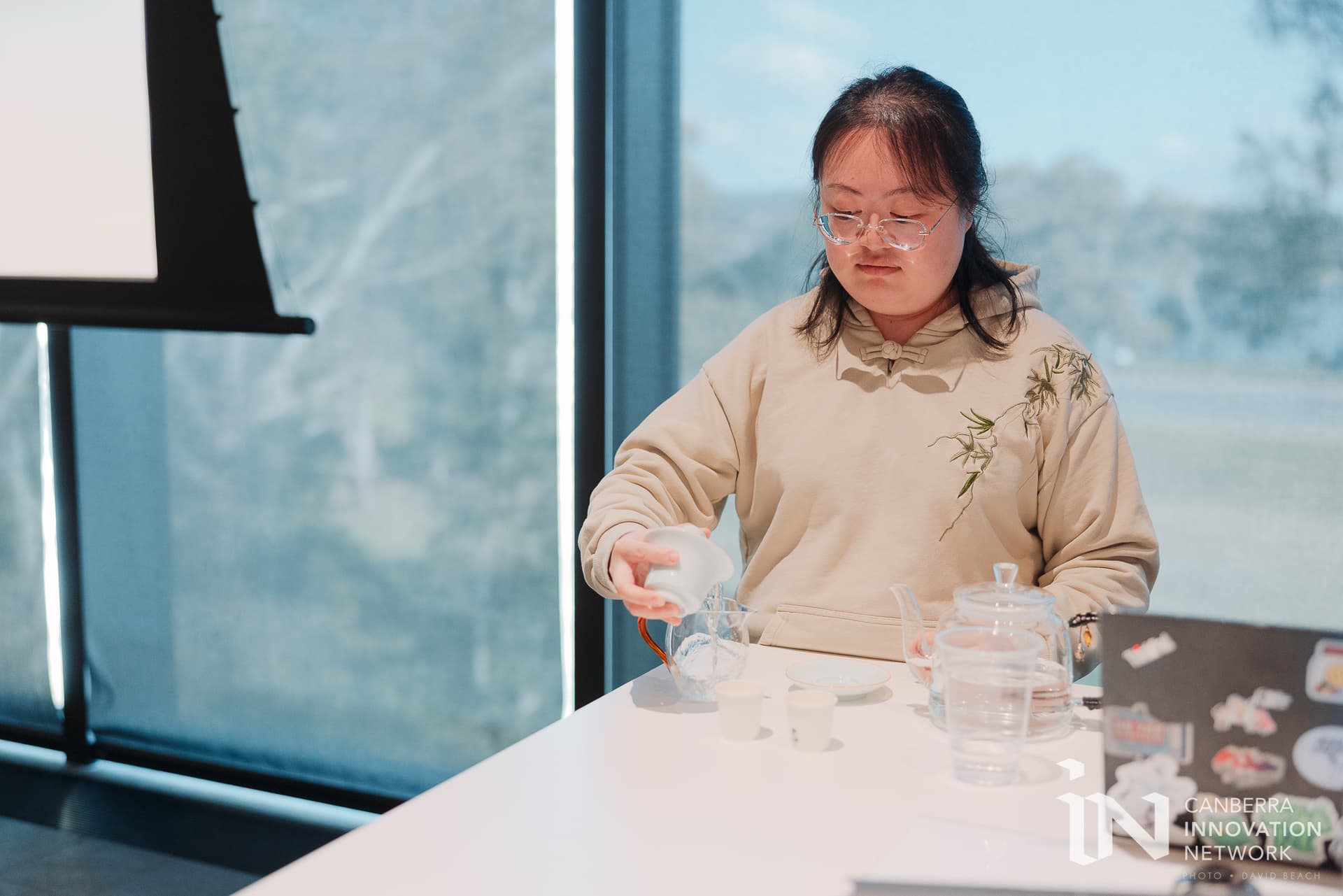 YEAF Co-founder, Yuting Su, preparing tea live during the InnovationACT final pitch event at ANU Research School of Physics Auditorium (September 2026). Photo: David Beach.